
"coffee plant factors"
5000 article(s) found

How to judge whether Yunnan small grain coffee tastes good? Basic factors of quality Identification of Yunnan small Coffee
Professional coffee knowledge exchange more coffee bean information please pay attention to the coffee workshop (Wechat official account cafe_style) Yunnan small coffee how to brew beans in the opponent is still unknown, how to put aside the flavor personality, based on some basic factors to judge whether a bean will taste good, nothing more than the following: 1 variety: Tibika, native species. It is true that Luo Dou and related

SCAA and CoE coffee cup test common factors-Vietnam coffee common brand pictures
SCAA and CoE coffee cup test common factors-Vietnam coffee common brand picture dry aroma, wet aroma is no longer included in the total score, the cleanliness of the score is more stringent, storage caused by the old bean flavor will affect the cleanliness of the score; sweetness will also open the score difference, because COE believes that high sweetness represents coffee altitude, planting and harvesting and handling is very good will appear high
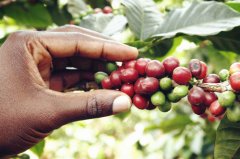
Red Kaduai Red Catuai of Tianyi Manor in Nicaragua planting area
The planting conditions in Nicaragua are not inferior to those in Central American countries. Shaded coffee is grown at high altitudes. It tastes round and balanced with less sharp acid. The main unknown factor is war and hurricanes, which make a single farm unsustainable. There is no historical data for raw bean merchants to track and check farm data until after 2003, the bad factors of coffee quality are removed and backward intercourse.

Important conditions for coffee cultivation three necessary environmental factors for planting coffee trees
There is a noun called coffee belt. There are more than 60 coffee producing countries in the world, most of which are located in the tropics and subtropics between the Tropic of Cancer (latitude 2326). This coffee growing area is called coffee belt (Coffee Belt) or coffee area (Coffee Zone). The annual average temperature of the coffee belt is above 20 ℃, because the coffee tree is a tropical plant, if the temperature is below 20 ℃.
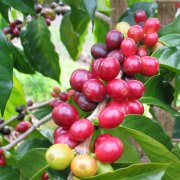
Boutique Coffee at the Manor of providence in Nicaragua
The planting conditions in Nicaragua are not inferior to those in Central American countries. Shaded coffee is grown at high altitudes. It tastes round and balanced with less sharp acid. The main unknown factor is war and hurricanes, which make a single farm unsustainable. There is no historical data for raw bean merchants to track and check farm data until after 2003, the bad factors of coffee quality are removed and backward intercourse.
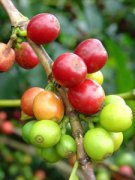
Boutique Coffee Manor in Nicaragua growing area
The planting conditions in Nicaragua are not inferior to those in Central American countries. Shaded coffee is grown at high altitudes. It tastes round and balanced with less sharp acid. The main unknown factor is war and hurricanes, which make a single farm unsustainable. There is no historical data for raw bean merchants to track and check farm data until after 2003, the bad factors of coffee quality are removed and backward intercourse.
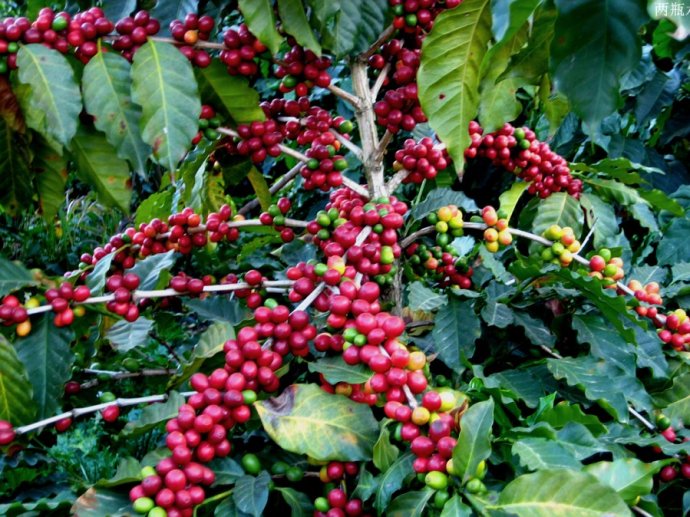
Introduction of World Fine Coffee: analysis and introduction of production problems of Yunnan Coffee and Fine Coffee
During this short two-week trip to Yunnan, although I only visited the coffee planting and processing base of Pu'er Menglian and some areas of Baoshan, I also found many problems in production and processing. Although it is inevitable to cover all of them, I still sum up these problems. I hope that more coffee lovers will pay attention to Yunnan coffee. After all, the development of Yunnan coffee not only depends on

Coffee Technology: Misael Sauceda Honey treatment at Nicaragua Manor, Nicaragua
The planting conditions in Nicaragua are not inferior to those in Central American countries. Shaded coffee is grown at high altitudes. It tastes round and balanced with less sharp acid. The main unknown factor is war and hurricanes, which make a single farm unsustainable. There is no historical data for raw bean merchants to track and check farm data until after 2003, the bad factors of coffee quality are removed and backward intercourse.

Some problems about Coffee production in Yunnan
At present, Yunnan coffee production is mainly distributed in Pu'er (180000 mu), Baoshan (100000 mu), Dehong (120000 mu) and Lincang (20 mu). Most of them are catimor varieties. At present, more than 80% of them are used as raw materials for instant coffee processing, some are supplied to Nestl é, and some are exported to Europe and the United States by local traders. From the grading criteria of specialty coffee

Some problems about Coffee production in Yunnan
At present, Yunnan coffee production is mainly distributed in Pu'er (180000 mu), Baoshan (100000 mu), Dehong (120000 mu) and Lincang (20 mu). Most of them are catimor varieties. At present, more than 80% of them are used as raw materials for instant coffee processing, some are supplied to Nestl é, and some are exported to Europe and the United States by local traders. From the grading criteria of specialty coffee

Nicaragua Providence Manor Misael Sauceda honey treatment
Nicaragua's growing conditions are not inferior to those of Central America. Coffee is grown at high altitudes with shade. The taste is round and balanced. There is not a very sharp acid. The main factors are war and hurricane attacks. As a result, single farms cannot be operated continuously. There is no historical data for green bean traders to track down farm data. After 2003, the bad factors that caused coffee quality were removed.
Yunnan Coffee and Fine Coffee-- Analysis of production problems
During this short two-week trip to Yunnan, although I only visited the coffee planting and processing base of Pu'er Menglian and some areas of Baoshan, I also found many problems in production and processing. Although it is inevitable to cover all of them, I still sum up these problems. I hope that more coffee lovers will pay attention to Yunnan coffee. After all, the development of Yunnan coffee not only depends on

Ethiopian coffee beans
General requirements: The moisture content of sun-dried coffee beans should not exceed 11.5% by weight, and at least 85% of the beans remain above 14 mesh after sifting. (This is why Egyptian beans don't look good: 14 + means 14, 15, 16, 17, 18, etc. mixed together, beans must be uneven) Parchment Coffee Grades: 1, 2, 3, 4, 5, 6, 7, 8, 9
Some problems of Coffee production in Yunnan in Chinese Coffee Market
At present, Yunnan coffee production is mainly distributed in Pu'er (180000 mu), Baoshan (100000 mu), Dehong (120000 mu) and Lincang (20 mu). Most of them are catimor varieties. At present, more than 80% of them are used as raw materials for instant coffee processing, some are supplied to Nestl é, and some are exported to Europe and the United States by local traders. From the grading criteria of specialty coffee

The factors that affect the taste of coffee Coffee varieties affect the taste of coffee
Professional coffee knowledge exchange more coffee bean information please pay attention to the coffee workshop (Wechat official account cafe_style) 7 factors that affect the flavor of coffee as coffee lovers, we know that coffee has a very wide range of characteristics. From earthy tones to sweet fruit flavors to flowers and tea-like aromas, our favorite drinks have an incredible taste experience. But...
General knowledge of Asian Fine Coffee on Coffee production in Yunnan
At present, Yunnan coffee production is mainly distributed in Pu'er (180000 mu), Baoshan (100000 mu), Dehong (120000 mu) and Lincang (20 mu). Most of them are catimor varieties. At present, more than 80% of them are used as raw materials for instant coffee processing, some are supplied to Nestl é, and some are exported to Europe and the United States by local traders. From the grading criteria of specialty coffee

Seven factors affecting hand-brewed coffee
When the bean has a good variety, planted in the area most likely to breed fragrant elves, with different elevations, soils, microclimates, and the careful care of coffee farmers, it thrives and is fruitful. BUT! Not all red fruits can become a boutique coffee bean! Today, let's talk about what kind of experience this magical fruit has to go through before it can become a boutique.
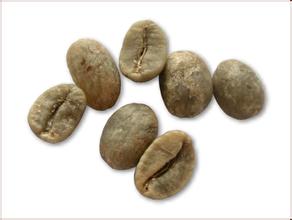
Coffee beans treated with Misael Sauceda honey from Nicaragua Tianyi Manor in Nicaragua, America
The planting conditions in Nicaragua are not inferior to those in Central American countries. Shaded coffee is grown at high altitudes. It tastes round and balanced with less sharp acid. The main unknown factor is war and hurricanes, which make a single farm unsustainable. There is no historical data for raw bean merchants to track and check farm data until after 2003, the bad factors of coffee quality are removed and backward intercourse.
Karana Jinta Mani Volcano Ubu treatment Plant, Bali, Indonesia
The success of the cafe has given them more motivation to pursue high-quality coffee sources. a few years ago, local coffee beans in Bali were processed by farmers in the Kintamani mountainous areas. however, regardless of weather factors, berry quality, post-production environment and other factors, it is always difficult for them to master the quality of raw beans in the past year. Since 2015, Rodney has decided

Introduction of Indonesian Mantenin Coffee producing area with lively Factor in mild Flavor
Mantenin's leaping acid mixes with the richest aroma, making your relaxed body manning coffee lively in a mild fragrance, and its outstanding taste captivates many suitors. In the 17th century, the Dutch introduced Arabica seedlings to Ceylon (present-day Sri Lanka) and Indonesia. In 1877, a large-scale disaster struck Indonesia